
How to Start a Kids Play Park: A Step-by-Step Guide
Starting a kids play park involves five critical decision points that determine whether the business succeeds: your business plan, your supplier, your partners, your team, and your lease agreement.
Get the business plan right, and you know exactly what rent you can afford. Get the lease wrong, and no amount of high-end playground equipment can save your margins. Get the supplier wrong, and you spend your first year resolving equipment defects instead of welcoming families and hosting profitable birthday parties.
This guide walks through all five decisions in the order you will face them—and explains how our team, alongside our operating park brand Pokiddo, supports you from your initial feasibility study through post-opening operations.
Target Audience: First-time investors planning a soft play park, kids café, or Family Play Center (700–1,500 m²) or a larger Family Entertainment Center (FEC). No prior amusement industry experience is required, but conducting local research in Step 1 is essential.
Step 1 — Validate the Local Market Before Designing Anything
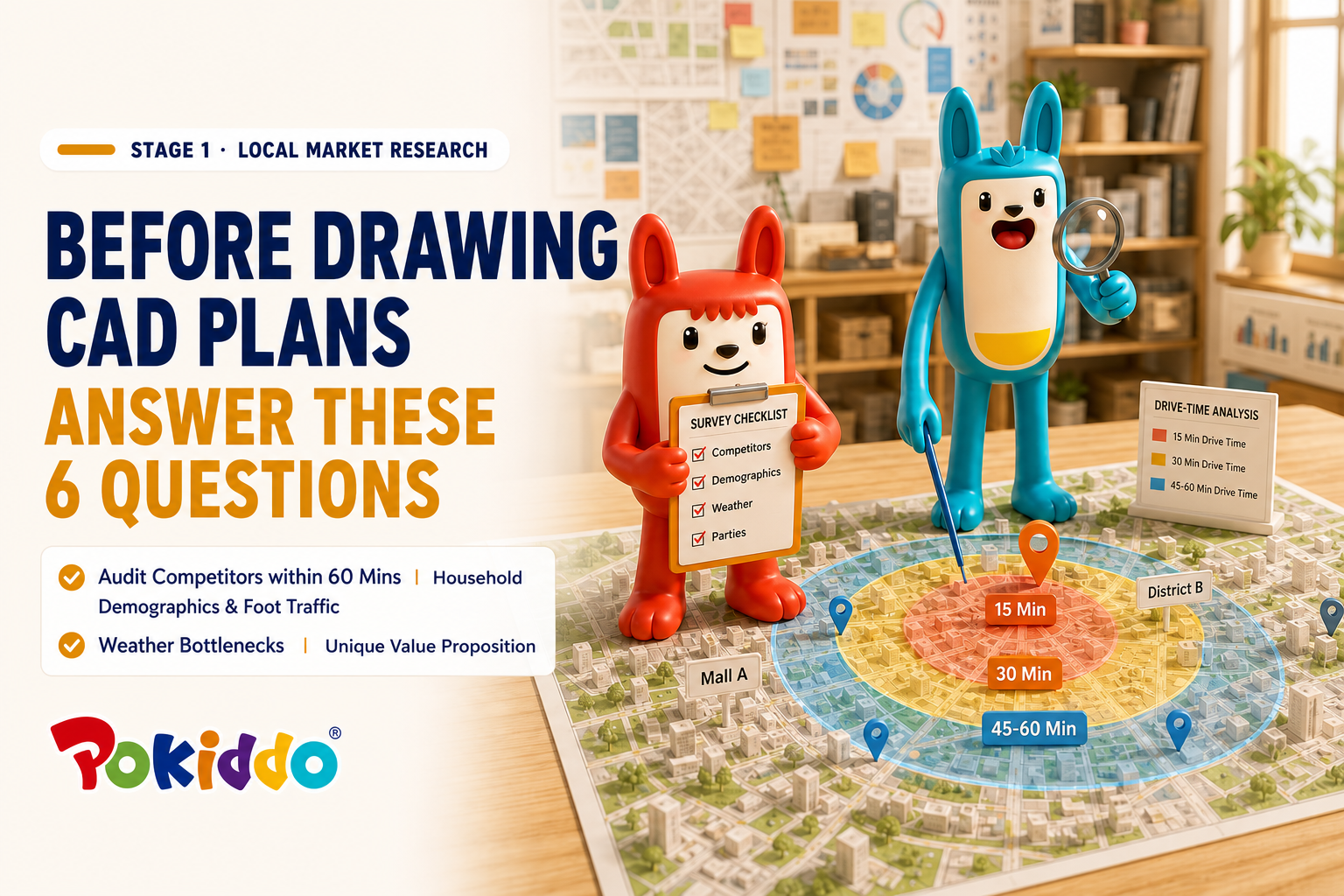
Most underperforming parks were designed before the local market was researched. Before consulting any equipment manufacturer, answer these six questions about your target city:
1. How many comparable kids play venues exist within a 45–60 minute drive?
Visit them as a paying customer, not an investor. Observe ticket pricing, party packages, target age profiles, and equipment maintenance.
2. What are local birth rates and school-age demographics?
A park located in a growing residential district with young families operates under entirely different economics than one in a commercial office hub.
3. Where do local families spend weekends?
Shopping malls, supermarkets, community parks, or sports complexes. Locating near established family destinations inherits steady foot traffic.
4. What seasonal or weather challenge do you solve?
Indoor play is fundamentally weather-driven. Know how many months per year your region requires climate-controlled indoor entertainment (e.g., summer heat, winter cold, or rainy seasons).
5. What is the local birthday party culture?
Birthday party bookings often make the difference between a high-margin park and a break-even one. If local parents regularly book external venues for celebrations, dedicated party rooms must be planned from day one.
6. What is the main weakness of your direct competitors?
Dated equipment, poor hygiene, lack of food options, or zero party hosting? This gap becomes your primary differentiation and drives your layout brief.
Document these findings—they form the foundation for all subsequent financial modeling.
Step 2 — The Business Plan: The 7 Numbers That Decide Your Project
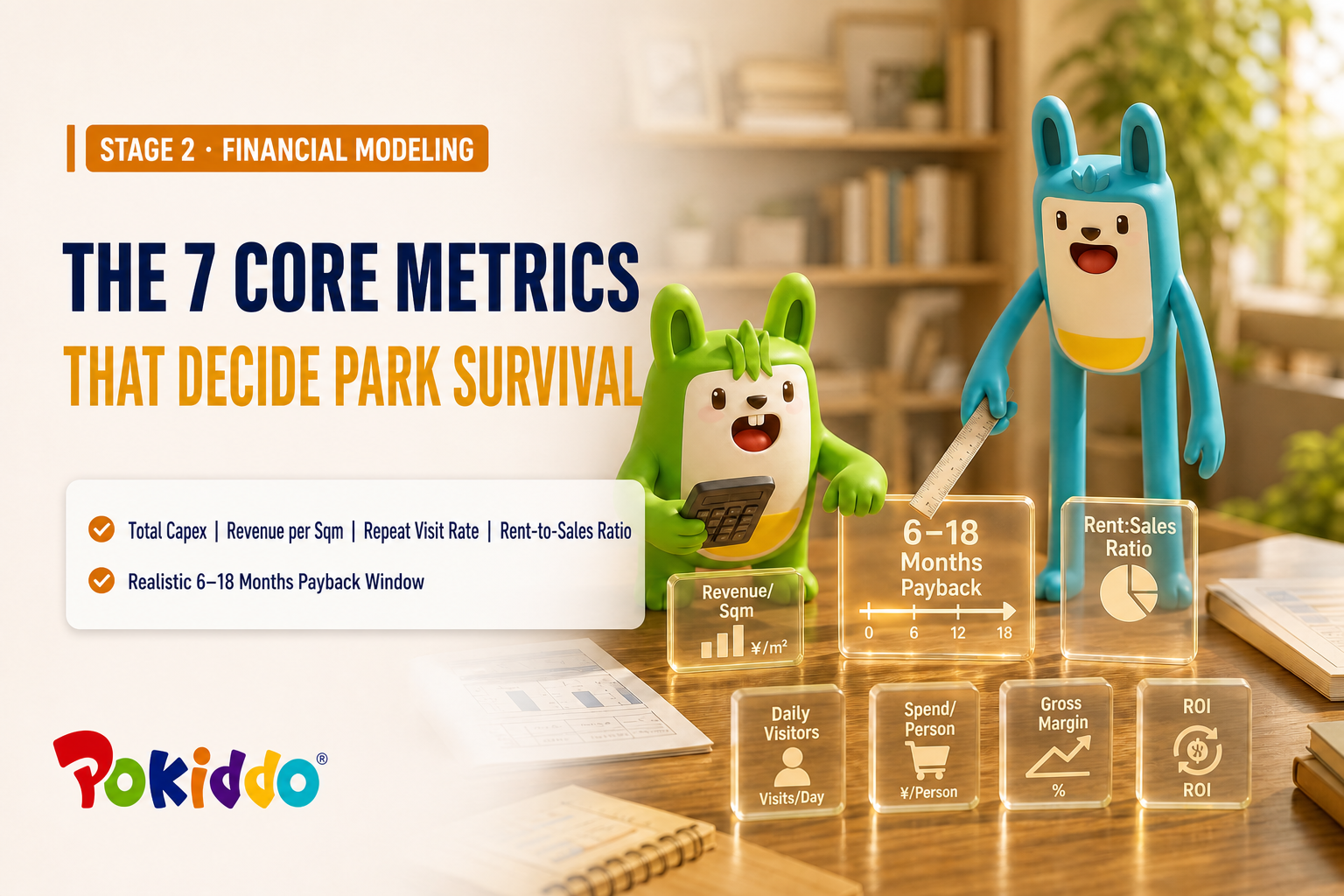
A viable business plan for a kids park is not an abstract 40-page document. It comes down to seven core figures you must be able to justify to landlords, banks, and yourself:
1. Total Investment Budget
The total capital required to open: 2D/3D design, custom equipment manufacturing, interior fit-out, lease deposit, permits, opening marketing, and essential operating cash reserves to cover the initial ramp-up weeks. Underestimating working capital is a common reason new venues struggle in month one.
2. Revenue per Square Meter (m²)
Annual admission, party, and café revenues divided by total rentable footprint. This metric determines the maximum sustainable rent you can pay—not the other way around.
3. Admission Price & Visit Frequency
Your standard ticket price, average dwell time, and return frequency. High repeat visitation, rather than a high one-time ticket price, drives long-term profitability.
4. Birthday Party Conversion Rate
Weekly party volume, average package pricing, and food/beverage margins. Party revenue per square meter typically outpaces walk-in admission margins.
5. Staffing Ratio & Payroll
Peak-shift staffing requirements and floor supervision models. Labor is your largest controllable operational cost.
6. Rent-to-Revenue Ratio
Total lease obligations (base rent plus maintenance/CAM fees) divided by projected gross revenue. This ratio determines whether a lease is a workable partnership or an operational burden.
7. Payback Period
The number of operating months required to recover your initial capital expenditure. Results vary based on local rent, pricing, wages, and marketing execution. Across our group's built and operated venues, payback has typically ranged between 6 and 18 months depending on market dynamics. Treat any promised or guaranteed returns as an immediate red flag.
Step 3 — How to Choose an Indoor Playground Supplier
First-time investors often encounter significant setbacks during supplier selection, usually stemming from hidden omissions rather than base pricing.
The 8 Supplier Screening Criteria:
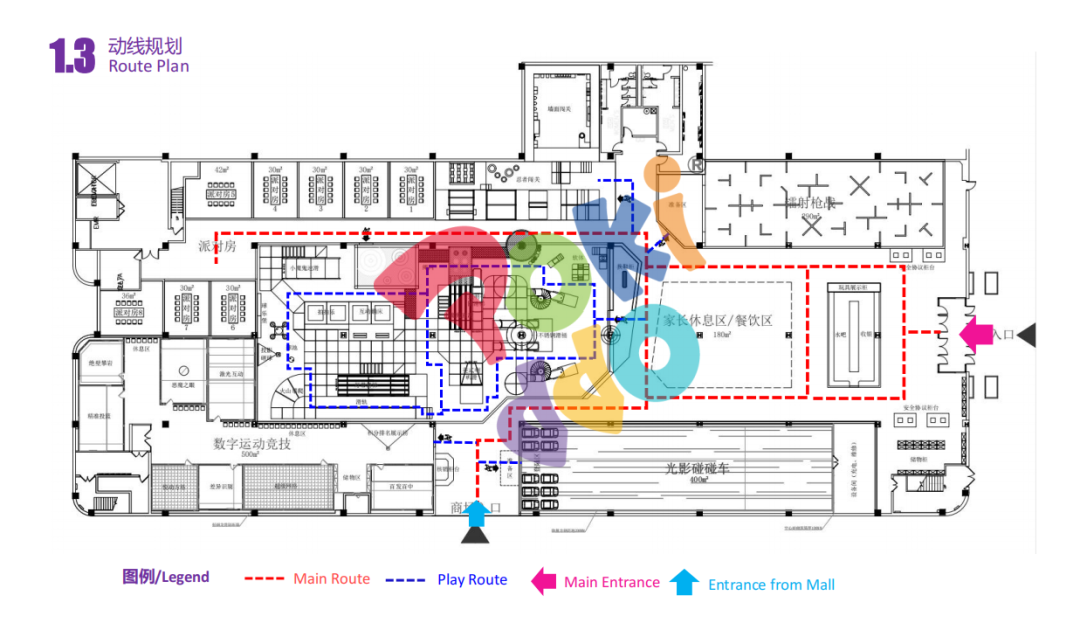
1. Custom Spatial Design Capability
Can the manufacturer produce integrated CAD layouts, 3D spatial proposals, and engineering blueprints tailored to your structural columns, fire routes, and clear ceiling heights? Generic catalog resellers cannot adapt to building realities.
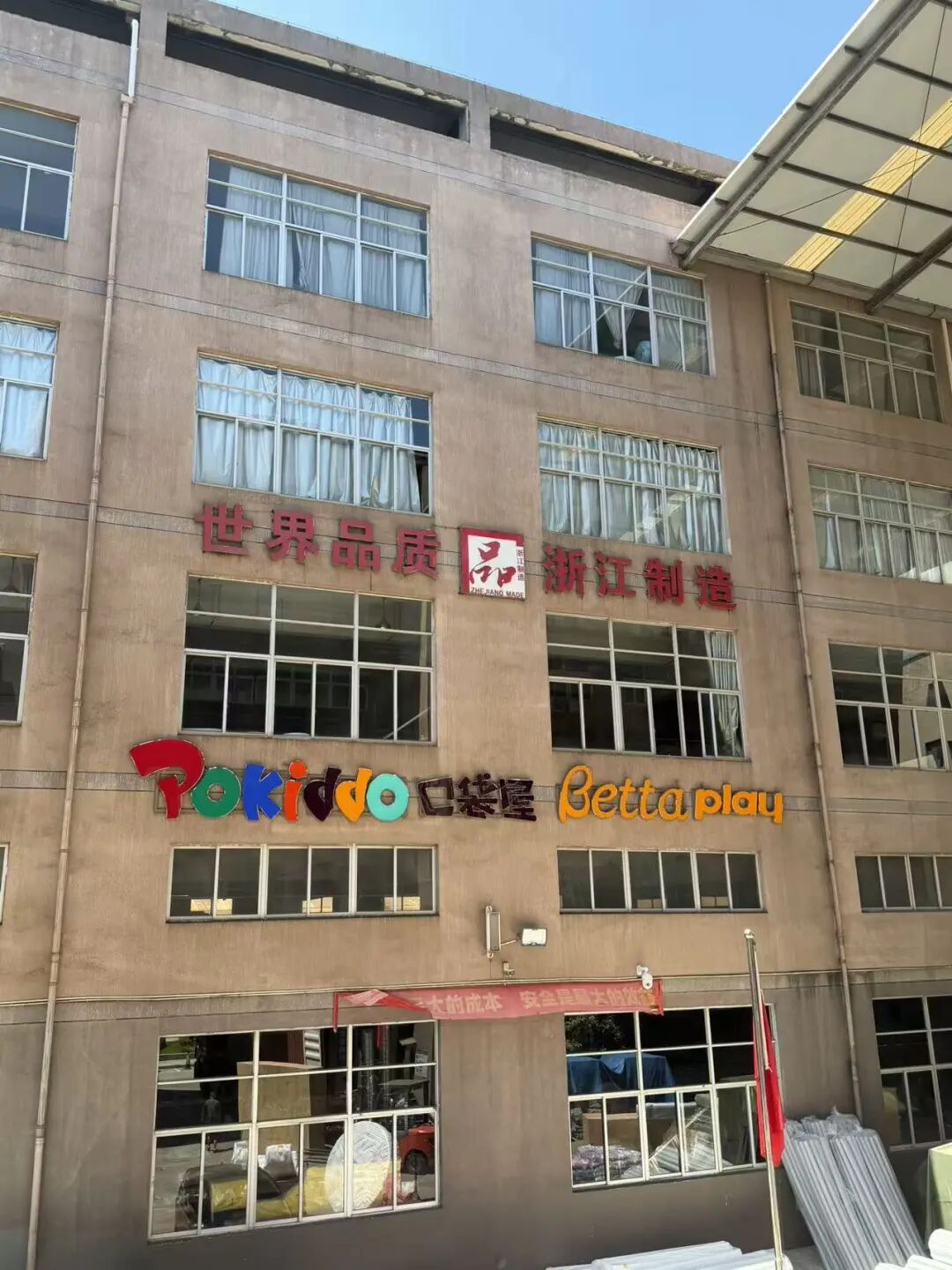
2. In-House Manufacturing
Is the equipment fabricated in the supplier's own facility or subcontracted to third parties? Subcontracting is often where spare parts support disappears after opening.
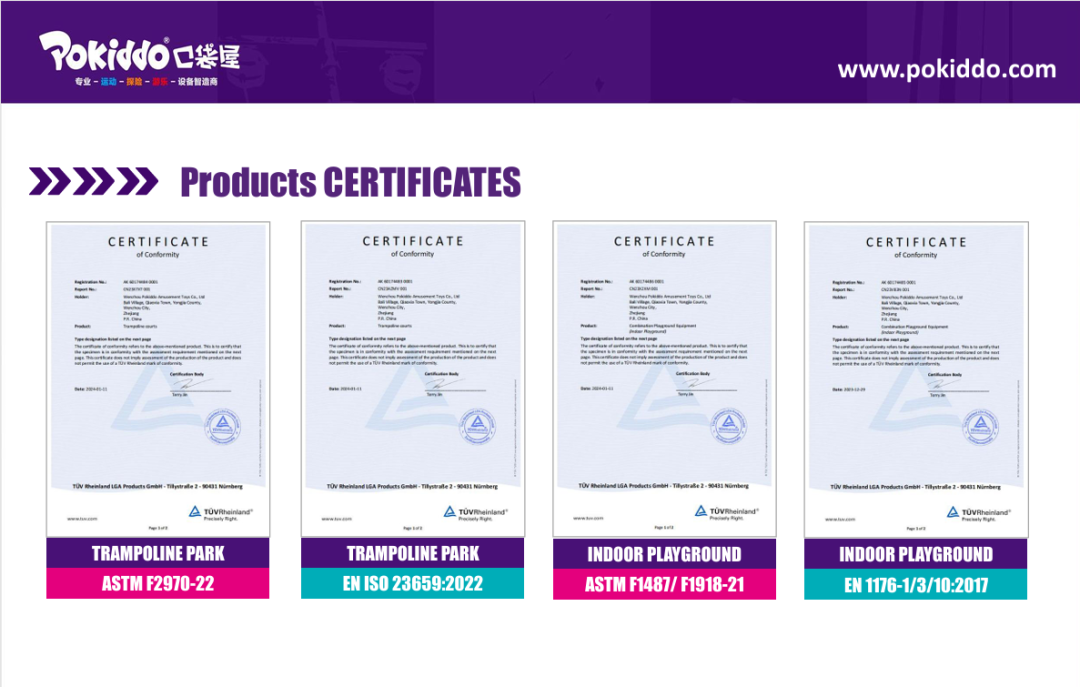
3. Verified Compliance Documentation
Insist on authentic ASTM F1918 / F1487 (US) and EN 1176 (EU) playground safety certifications, backed by genuine TÜV and SGS material test reports.
4. Visible Quality Control Milestones
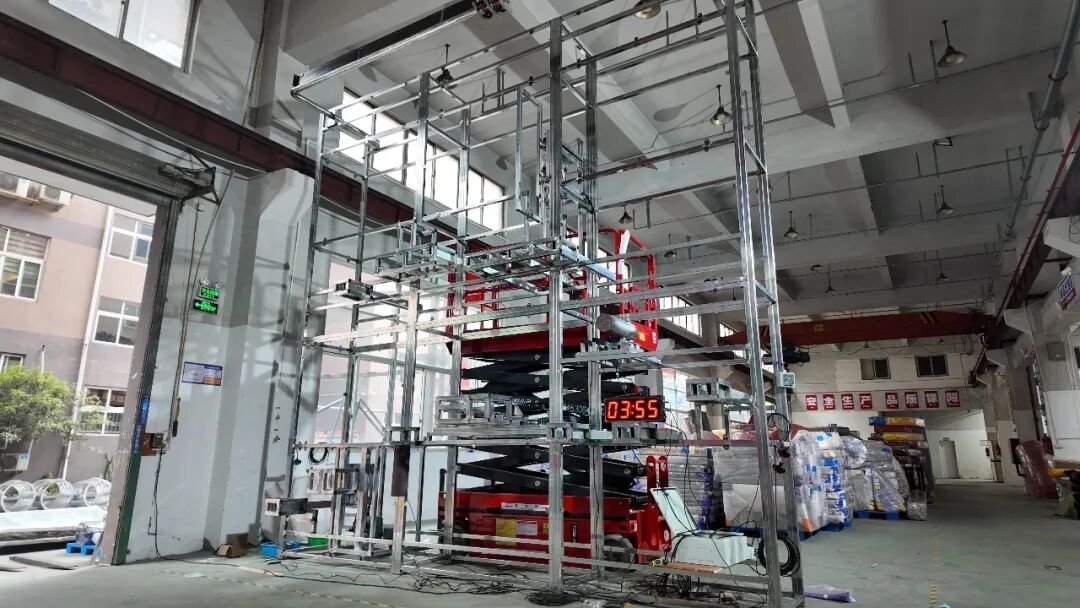
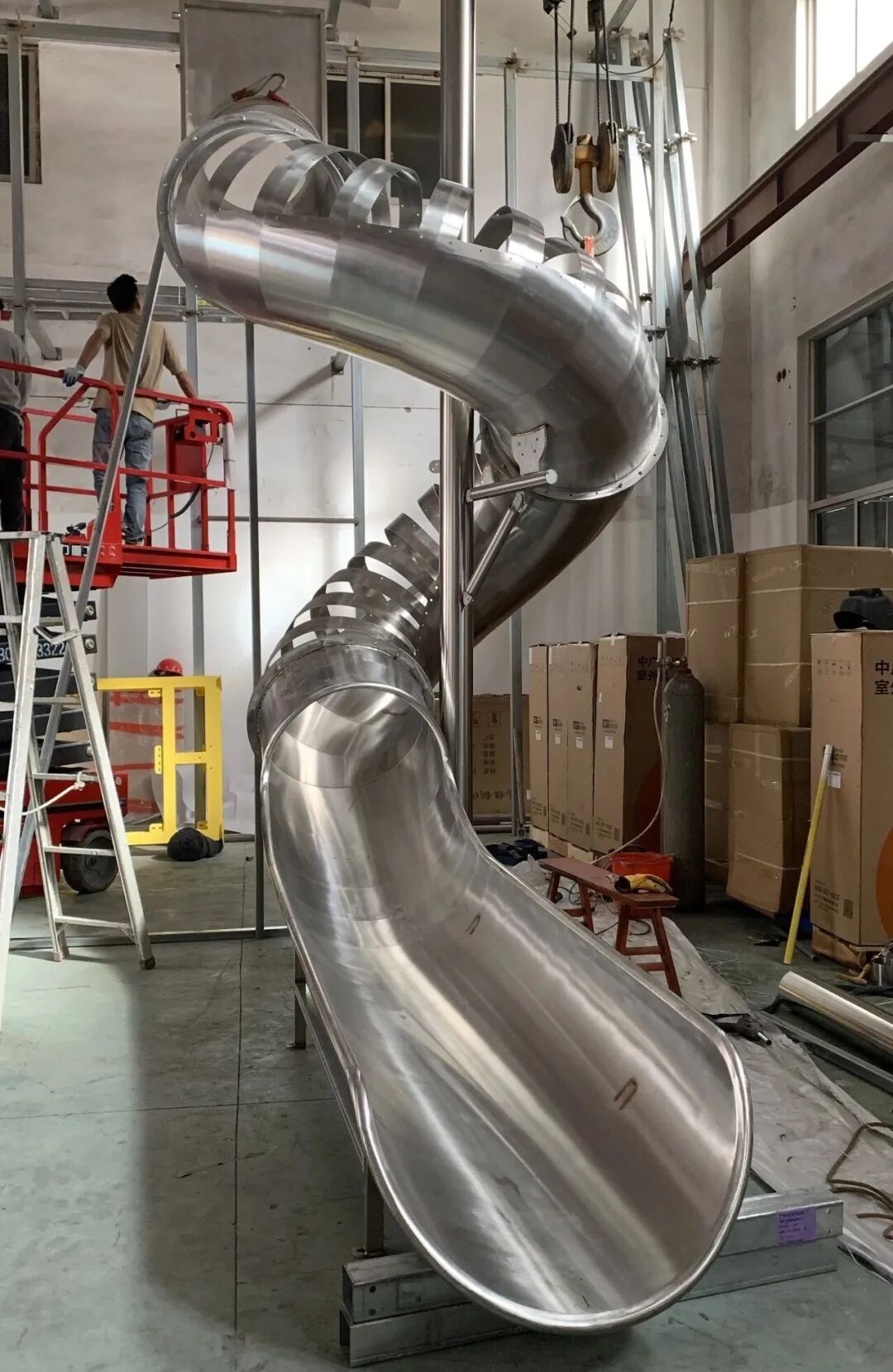
Look for clear internal quality gates: material sampling, dedicated QC inspectors, structural trial assembly of steel frames before dispatch, and specialized component stress tests.
5. Professional Installation Support
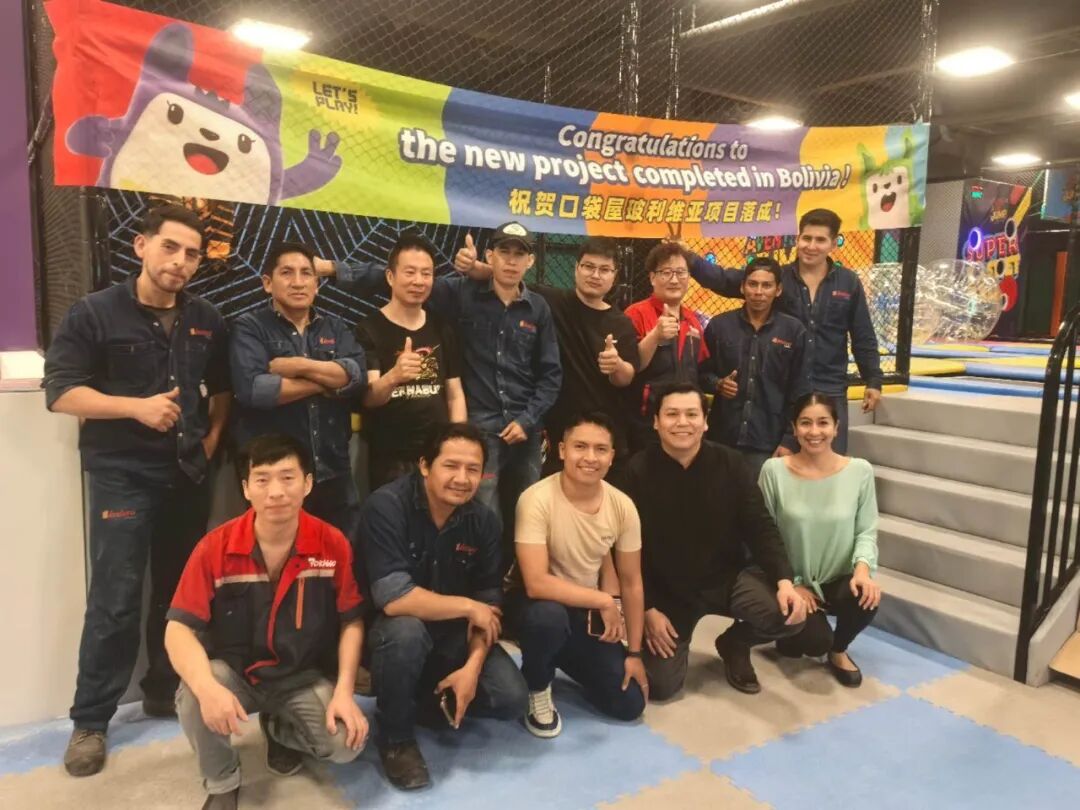
Does the manufacturer dispatch qualified installation engineers, and do they provide millimeter-grade engineering drawings suitable for local certified crews? Installation mistakes are the leading cause of delayed openings.
6. Long-Term Maintenance & Spare Parts
Are emergency repair kits included with shipment? Can the supplier provide replacement parts and service equipment years after launch, even for structures sourced elsewhere?
7. Direct Park Operating Experience
Does the company operate family entertainment centers itself, or purely sell equipment? Suppliers who have never managed payroll or venue operations often produce designs that look appealing in renderings but prove inefficient to run.
8. Verifiable Case References
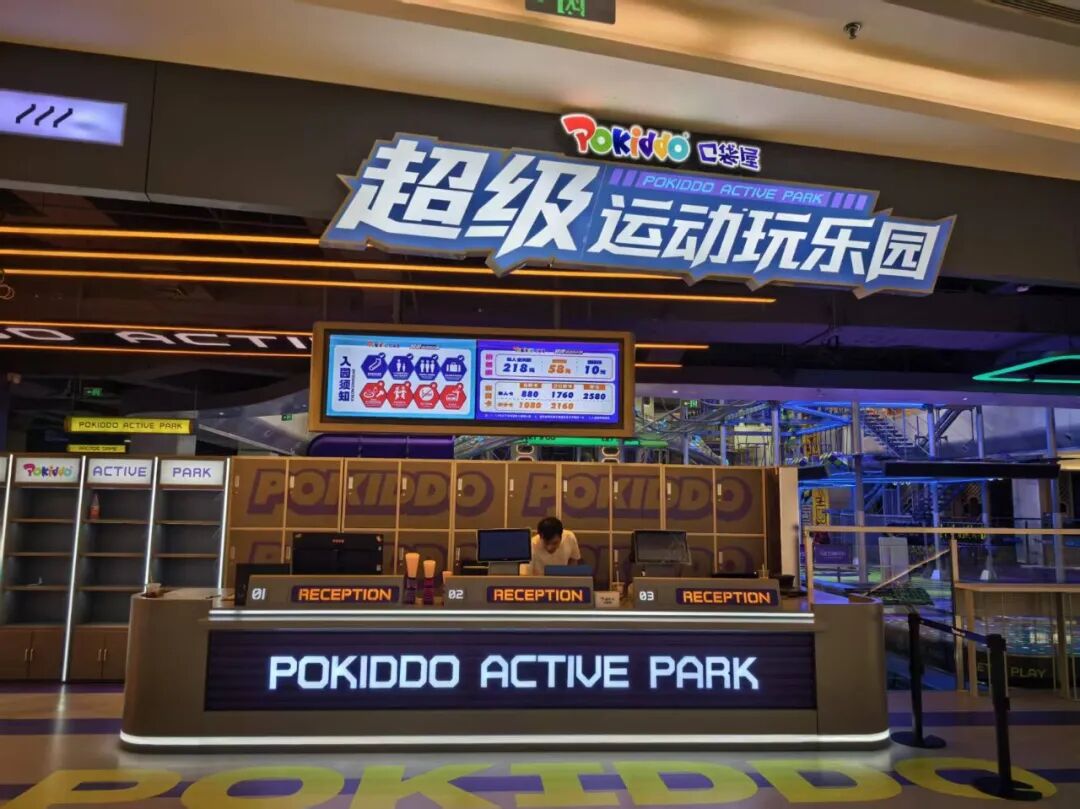
Request live project references in comparable markets. Any vendor can generate 3D renders; operational venues provide tangible proof of durability and traffic flow.
Common Warning Signs to Avoid:
- Promising a layout before requesting structural drawings, ceiling clearance, or fire exit data.
- Virtual tours limited to pre-recorded clips rather than live factory floor walkthroughs.
- Business licenses categorized under trading or distribution rather than manufacturing.
- Quotes omitting freight, installation, taxes, or clearance documents that inflate post-contract.
- Vague responses regarding steel wall thickness, welding standards, or foam densities.
- Unusually low pricing that hides severe reductions in soft padding density, net strength, or structural steel gauge.
Step 4 — How to Structure Business Partnerships
If launching with business partners, define all legal and operational terms in writing before capital is committed:
1. Define Capital vs. Operational Contributions
Differentiate strictly between financial investors and active managing partners who oversee floor operations weekly.
2. Establish Decision Rights
Establish clear approval rules for day-to-day operations (staffing, scheduling, routine marketing) versus major capital decisions (expansion, asset sales, major renovations) to prevent management deadlocks.
3. Establish Exit & Valuation Mechanisms
Agree on written terms covering partner exits, non-performance, asset valuation methodologies, and buyout rights should circumstances change in year two or three.
Step 5 — Build an Effective Venue Operating Team
Avoid the common mistake of hiring a single general manager and expecting them to handle safety supervision, front desk checkout, community marketing, and party sales simultaneously.
Recommended Hiring Sequence:
1. Park General Manager: Hire early so they can undergo full operational training well before opening day.
2. Party & Events Coordinator: Birthday packages are an active sales function; dedicate focused staffing to this channel from the start.
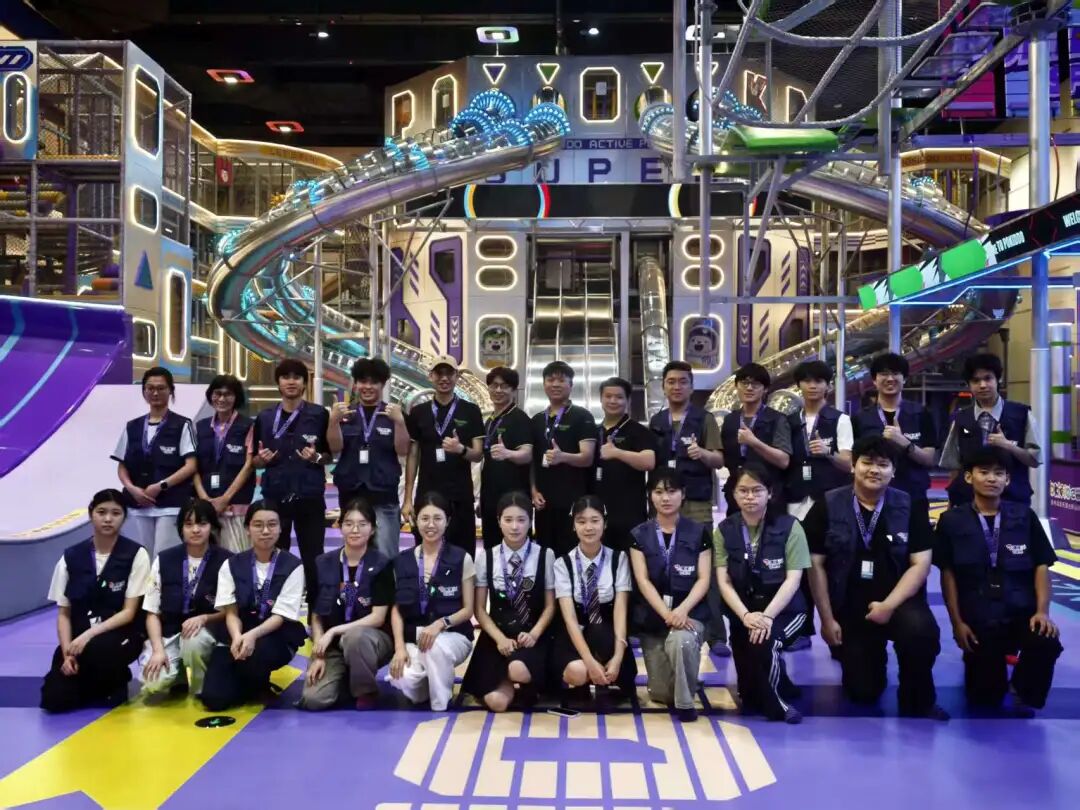
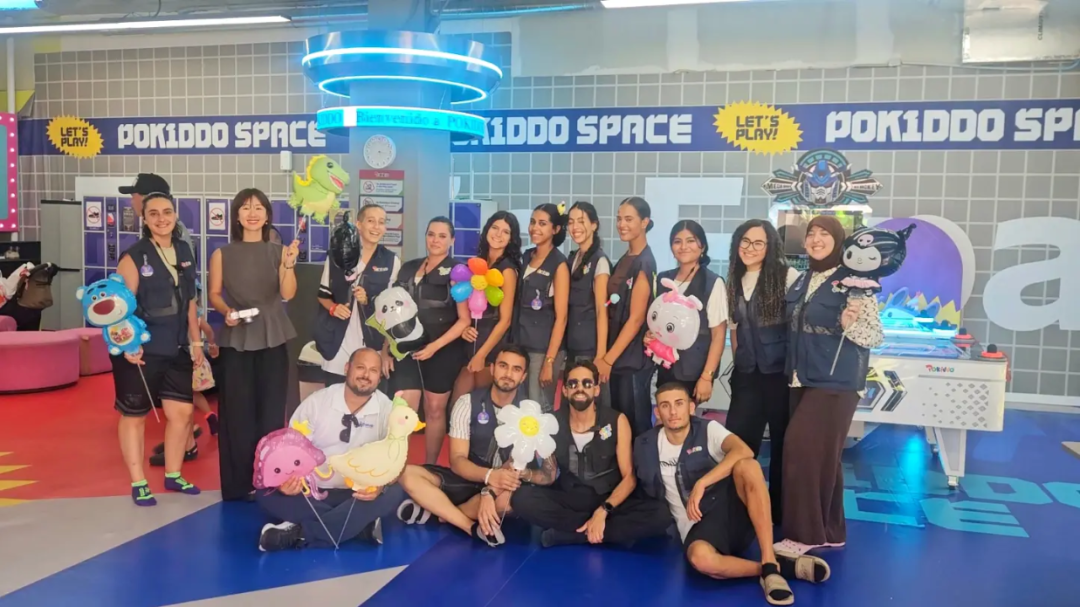
3. Floor Play Supervisors / Safety Coaches: Frontline staff who ensure rules are followed, eliminate blind spots, and give parents peace of mind.
4. Reception & Cashier Staff: Equipped with an intuitive ticketing and digital waiver system to eliminate check-in bottlenecks.
Operational Training Before Opening:
Comprehensive pre-opening training must cover guest safety protocols, emergency incident response, equipment inspection routines, and party execution. Equip staff with a dedicated park management system for digital ticketing, automated waiver tracking, and turnover analytics rather than relying on manual paper logs.
Step 6 — Negotiate Key Commercial Lease Terms
Commercial leases represent long-term legal obligations. Negotiate using clear financial models rather than general assumptions:
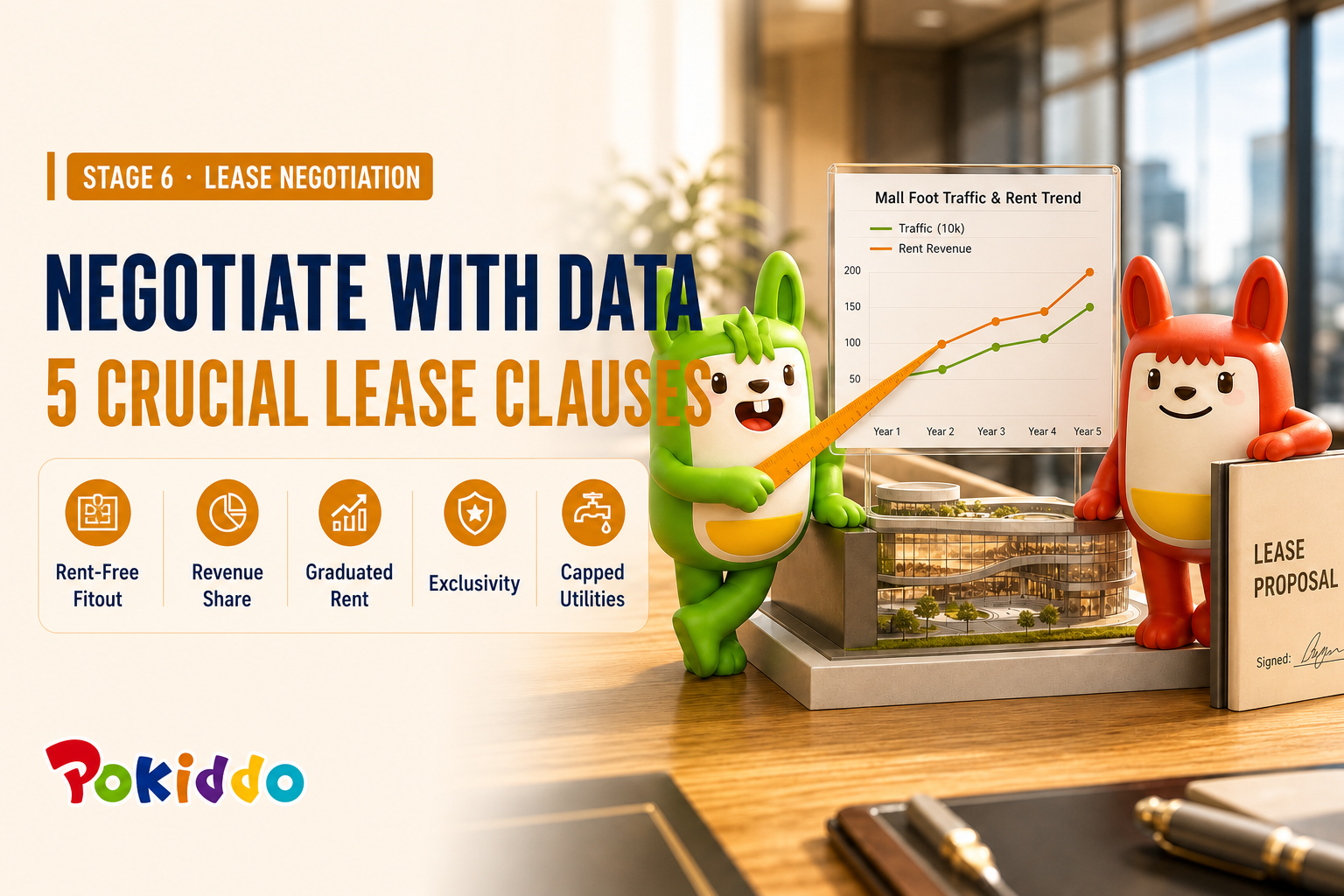
1. Fit-Out / Rent-Free Period
Secure adequate rent-free months to accommodate equipment production, maritime shipping, customs clearance, on-site assembly, and pre-launch staff trials.
2. Rent Structure
Seek a turnover-linked model or hybrid structure (lower base rent plus percentage of revenue) during your first operating year to manage downside exposure.
3. Predictable Step-Up Schedules
Ensure annual rent escalations are tied to trading anniversaries rather than rigid calendar dates.
4. Break Clauses
Negotiate clear exit or renegotiation checkpoints (e.g., at month 24 or 36) with defined terms to mitigate demographic shifts.
5. Capped Service Charges (CAM)
Require clear definitions and caps on common area maintenance fees, utility surcharges, and shared HVAC expenses.
6. Exclusivity / Radius Protection
Include a radius clause preventing the landlord from leasing adjacent units to directly competing indoor play concepts.
7. Realistic Handover & Opening Deadlines
Align contracted opening milestones with realistic overseas equipment production and logistics timelines.
Step 7 — How Pokiddo Supports Your Project Lifecycle
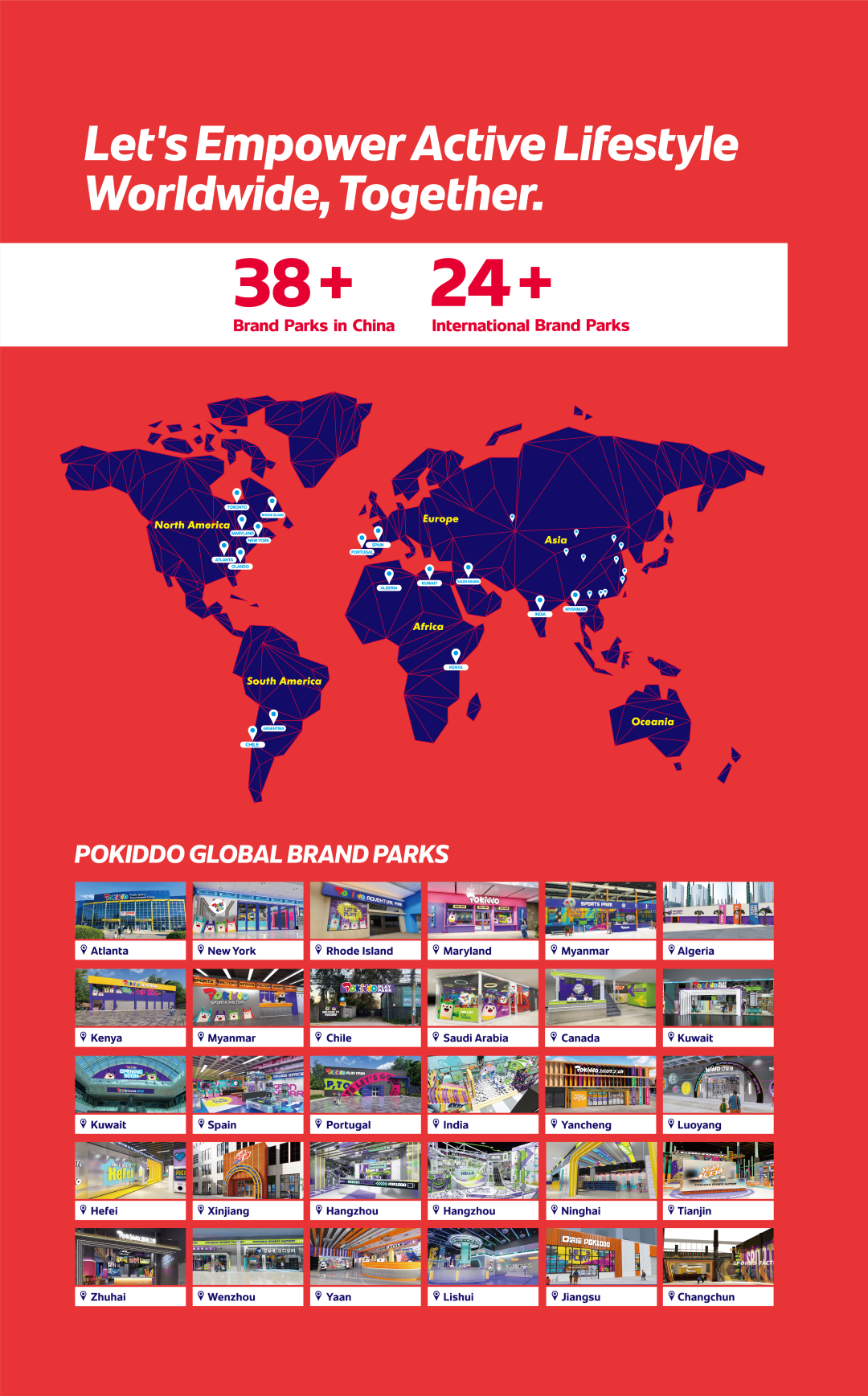
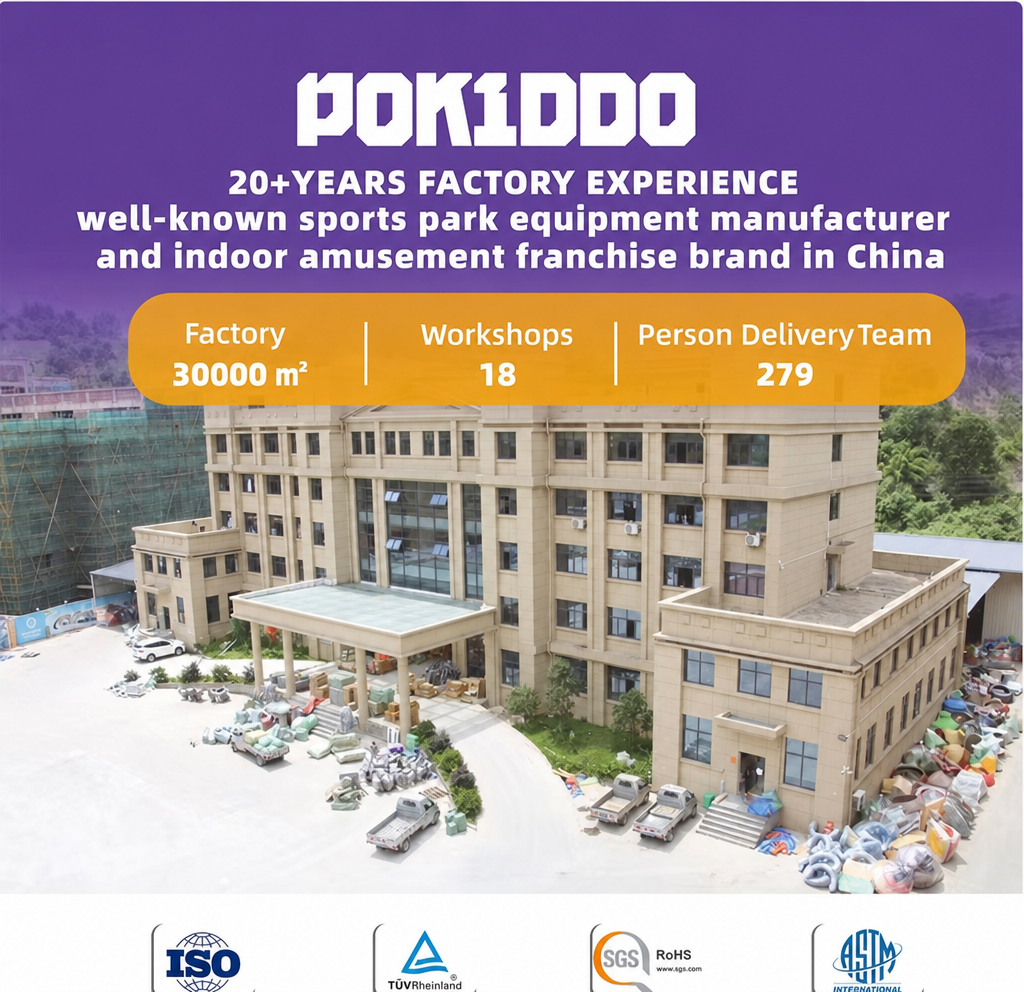
Bettaplay engineers and manufactures custom play equipment. Pokiddo represents our group's franchise and self-operated park brand, active since 2018 with dozens of successful venues deployed globally.
Our end-to-end support model includes:
- Pre-Commitment Feasibility: Venue evaluation, demographic matching, and preliminary spatial zoning.
- Business Modeling: Assistance with ticket pricing logic, party tier structures, and square-meter revenue projections.
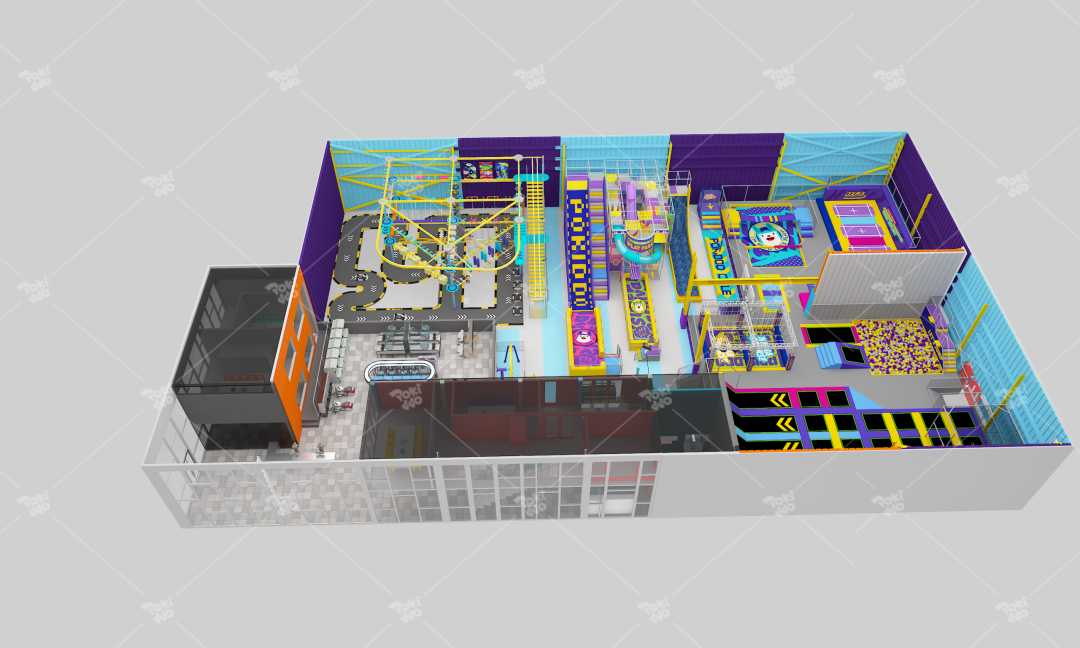
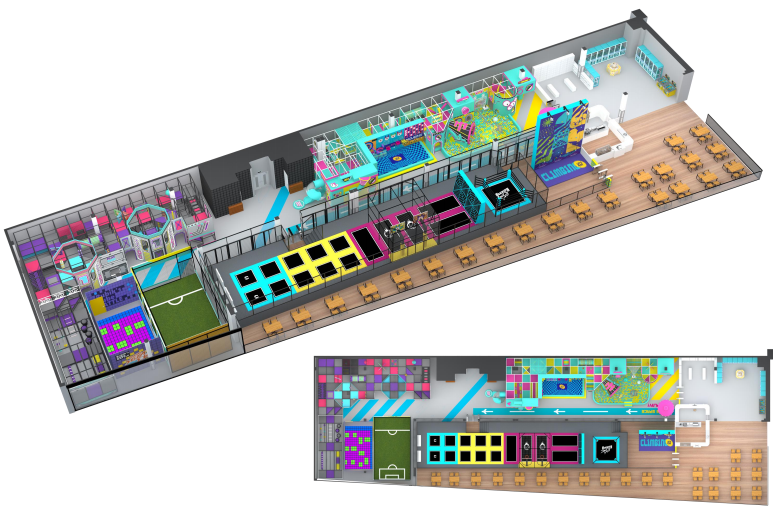
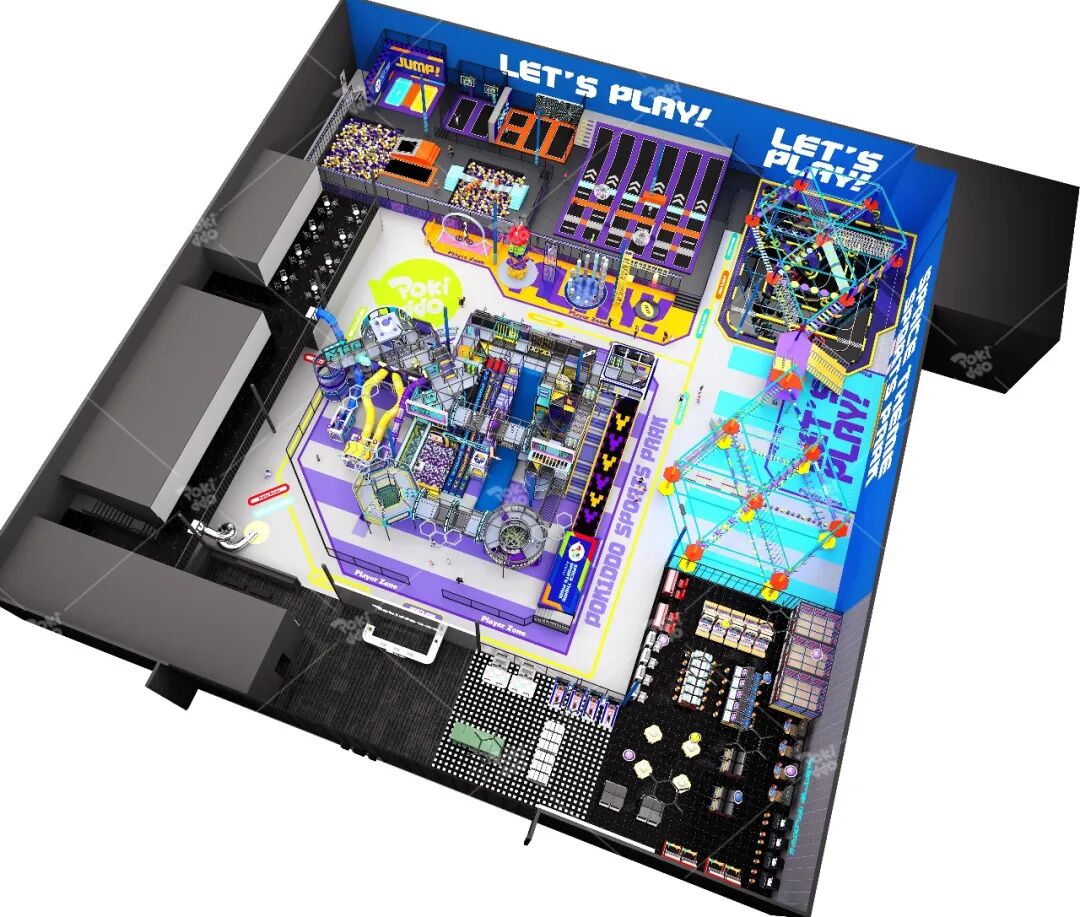
- Spatial Design & Engineering: 2D CAD layout, 3D themed environment rendering, dynamic walkthrough video, and structural blueprints.
- Production & Quality Verification: Factory trial assembly, certified materials (ASTM/EN1176, TÜV/SGS), and container loading oversight.
- Turnkey Installation: Experienced engineers deployed for on-site installation or structured self-installation documentation.
- Operational Training: On-site staff coaching, floor safety protocols, party management workflows, and digital POS integration.
- Post-Launch Support: Seasonal event playbooks, preventative maintenance routines, and modular upgrade pathways.
Whether opening under our established Pokiddo brand or developing your own proprietary concept, our team provides the manufacturing foundation and operational guidance required to build a thriving family destination.
Frequently Asked Questions (FAQ)
Q: Do I need prior amusement industry experience to start an indoor kids park?
A: No. Many successful operators are first-time investors who combine careful local demographic research with structured operations. Partnering with a team that both manufactures equipment and runs commercial venues bridges the operational gap.
Q: How much capital is required to open an indoor soft play park?
A: Capital requirements depend on square footage, clear ceiling heights, attraction mix, and local leasehold conditions. We provide complimentary CAD spatial planning and itemized budget estimates for your specific space, separating equipment fabrication, logistics, and installation clearly.
Q: How do we negotiate lease terms effectively as a new business?
A: Present your projected revenue per m², traffic modeling, and opening ramp-up plan directly to the landlord. Commercial leasing teams offer more favorable terms, rent-free windows, and tenant improvement allowances to operators who present defensible business plans.
Q: How long does the entire setup take from initial design to grand opening?
A: For a 700–1,500 m² venue, planning, fabrication, shipping, and installation typically take 3 to 6 months depending on structural review and local permitting timelines.
Request Your Free Layout Proposal
Share your venue details with our engineering and operations team:
1. Architectural floor plan (CAD or PDF with column grids, entrances, and emergency exits)
2. Clear ceiling height to the lowest beam or ductwork
3. Target player age range and planned investment budget
4. Project city and country
Our team will return a customized 2D CAD layout proposal and an itemized preliminary quotation for your site.